

So you’ve bought rural land—or you’re thinking about it. The big question that follows isn’t just “what could I do?” but “what can I realistically do right now?” New landowners often freeze up because the options feel infinite, permits are unclear, and budgets seem unpredictable.
The good news: you don’t need every answer before you buy. A practical, prioritized roadmap of rural land use ideas—organized by cost, permit complexity, and effort—removes the guesswork and helps you move forward with confidence.
This guide ranks seven practical uses for rural property. From a simple weekend camping setup to complex land development, you’ll get realistic cost ranges, common permit issues, and tips for next steps. Whether you’re planning a future homestead or learning how to buy rural land for the first time, this article aims to make the choices clearer and more actionable.
Why Most People Overthink Rural Land Use Ideas
The moment you own vacant land, possibilities flood your mind: build now or later? Farm? Hold for appreciation? The abundance of options—plus uncertainty about permits and budgets—keeps many owners stuck in planning mode for months or years.
Remember: land ownership rarely forces immediate action. Unlike a lived-in house, raw land waits. You can experiment, learn the property, and scale up gradually. What changes outcomes is a realistic ranking system: understanding what each use actually requires in dollars, time, and bureaucracy so you can match options to where you are today.
Understanding the Three Key Variables: Cost, Permits, and Difficulty
Throughout this guide, we evaluate each rural land use across three practical dimensions. These are general guidelines meant to help you compare options, not exact guarantees—local conditions and regulations create wide variation.
Cost includes initial investment and ongoing expenses: equipment, infrastructure, utility connections, and recurring costs like property taxes, insurance, or maintenance. Use the ranges below as budgeting starting points rather than precise quotes.
A “low” cost option generally means under $2,000 to start. “Medium” ranges from $2,000–$15,000. “High” exceeds $15,000. Local terrain, contractor availability, and material prices can move you between categories.
Permits refers to regulatory complexity—zoning approvals, building codes, environmental rules, and county requirements. “Low” means minimal or no permits in many locations. “Medium” involves standard permits. “High” indicates multiple agencies, environmental studies, or subdivision approvals. Always confirm with your county planning or building department.
Difficulty includes time commitment, skill level, and physical labor. “Easy” works for complete beginners with minimal time investment. “Moderate” requires research and some hands-on work. “Hard” typically requires professional help or substantial experience.
These variables shift by location and circumstance. For example, a well installation may be simple in sandy soils and far more difficult (and expensive) in rocky or arid regions.
Timeline: How Quickly Can You Start Using Rural Land?
Another overlooked decision factor is timeline. Some uses deliver immediate gratification; others require months or years.
Immediate uses (day one to one month) include camping, recreation, and passive investment holding—you can use your land the weekend after closing in many cases.
Short-term uses (three to twelve months) cover RV placement, tiny-home setups, and basic homesteading starts. These require planning and some site prep—access improvements, temporary utilities, or fencing—but not major construction.
Long-term uses (one to three-plus years) include full home construction, comprehensive off-grid systems, and land development projects. These need significant capital, permit approvals, and phased work; they can’t be rushed.
Understanding where your chosen use-case falls on this timeline helps align expectations. If you need to occupy the land next month, home construction isn’t realistic—but camping or RV placement might be perfect. Many owners start with immediate uses while planning long-term goals.
The 7 Rural Land Use Ideas: Quick Comparison
Before the deep dives, here’s a quick reference comparing the seven use-cases. Use it as a starting point and then read the detailed sections for caveats and planning tips. (All cost and timeline ranges are estimates for budgeting only.)
The rankings use a simple scale for easy scanning. When you’re ready to browse available rural properties, you’ll know which options likely match your budget and timeline.
| Use-Case | Startup Cost | Permit Complexity | Difficulty Level | Time to Start |
|---|---|---|---|---|
| Weekend Camping Retreat | $ (Under $500) | Low | Easy | Immediate |
| Land Investment (Hold) | $ (Ongoing taxes) | Low | Easy | Immediate |
| RV or Tiny Home | $$ ($5,000-$15,000) | Medium | Moderate | 3-6 months |
| Hobby Farm/Homestead | $$ ($3,000-$10,000) | Low-Medium | Moderate | 6-12 months |
| Off-Grid Infrastructure | $$$ ($15,000-$50,000+) | Medium-High | Hard | 12-18 months |
| Building a Home | $$$ ($50,000-$300,000+) | High | Hard | 12-24 months |
| Land Development | $$$ ($50,000-$500,000+) | High | Hard | 2-3+ years |
Rural Land Use Idea #1: Weekend Camping Retreat (Lowest Barrier to Entry)
If you want to enjoy your land right away, camping and recreation top the list. This is the easiest entry point—ideal for buyers seeking immediate use and low cost.
Startup costs are minimal: a quality tent ($100–$300), basic camping gear ($200–$400), and a portable fire ring or camp stove ($50–$100). That’s often enough for comfortable weekend stays.
Many rural properties in agricultural or unincorporated areas require no special permits for personal, occasional camping, but local rules vary—especially in regions with wildfire risks or protected lands. Verify fire restrictions and local ordinances before lighting fires or leaving a vehicle unattended for long periods.
The advantage is immediate usability: close on Friday, camp on Saturday. Camping also lets you learn the land’s drainage, wind exposure, wildlife activity, and seasonal quirks—information that pays off when you plan future improvements.
Practical considerations: road access (can you drive to a suitable spot?), water (bring your own or use stored water), and wildlife precautions (use bear-proof containers where native animals are a concern). Over time, some owners add gravel pads, picnic tables, or a small storage shed to improve comfort.
This low-risk approach is a natural stepping stone. Many owners camp regularly while saving or planning for an RV, tiny home, or permanent build.
Explore Land Ownership Options
You may not need a massive down payment or perfect credit to own rural land—financing options vary. Browse our available properties and use the payment calculator to estimate monthly costs for parcels that interest you. Terms and availability depend on each listing and your financial situation.
Rural Land Use Idea #2: Long-Term Land Investment (The ‘Do Nothing’ Strategy)
Strategic patience can be a smart plan. Holding rural land as a passive investment often has low carrying costs and requires minimal effort beyond routine visits and property taxes.
This works best in areas with growth potential—near expanding suburbs, improving transportation links, or regions attracting remote workers. But remember: not all remote land appreciates substantially. Local market dynamics matter more than general optimism.
Ongoing costs tend to be low. Property taxes on vacant rural land commonly range from roughly $100–$500 annually depending on acreage and location. Consider insurance ($150–$300/year) and occasional site visits to check fences or signage.
Tax rules are important. Land held purely for investment won’t qualify for homestead exemptions in most states, though you can usually deduct property taxes. If you sell after more than a year, long-term capital gains rates typically apply. Consult a tax professional and refer to IRS guidance for specifics.
“Land remains one of the few finite assets. In desirable growth corridors, patient landholders can see solid long-term returns. The key is managing low carrying costs—buy right, minimize expenses, and let demographic trends work in your favor.” — Michael Corbett, Rural Land Investment Strategist
Holding is a low-effort route to ownership, suitable for investors, future retirement plans, or buyers storing land for family. Keep expectations realistic and focus on locations with plausible upside rather than hoping remote parcels will suddenly become valuable.
Rural Land Use Idea #3: Recreational Vehicle or Tiny Home Placement
The RV and tiny-home movement offers faster livability than traditional builds. This option is attractive because you can often occupy a site much sooner, and you can phase upgrades over time.
Permit rules differ widely. Some counties allow RVs and tiny homes as temporary or even permanent dwellings on private land; others impose minimum square footage for primary residences or limit non-permanent structures. Research your county code before buying—this single factor often determines feasibility.
Costs split into two parts: the structure and site prep. A used RV might cost $5,000–$30,000; tiny homes range from about $20,000 for a DIY build to $80,000+ for professionally built units. Site prep—clearing, leveling, gravel pads—typically adds $1,000–$5,000, depending on access and terrain.
Many buyers take a phased path: start in an RV using portable generators and water tanks, add solar panels and a well later, and eventually install a permanent septic if desired. Grid hookups—electricity and water mains—can cost $5,000–$20,000 or more if lines are far away.
Off-grid options (solar, well, composting toilet) reduce monthly bills but require upfront investment and maintenance skills. If financing is of interest, consider that owner-financing options vary by seller—review terms carefully and consult LandFix resources like our financing education for examples.
This use-case fits remote workers, retirees seeking lower-cost housing, or anyone testing rural life before committing to a permanent build.
Rural Land Use Idea #4: Small-Scale Homesteading or Hobby Farm
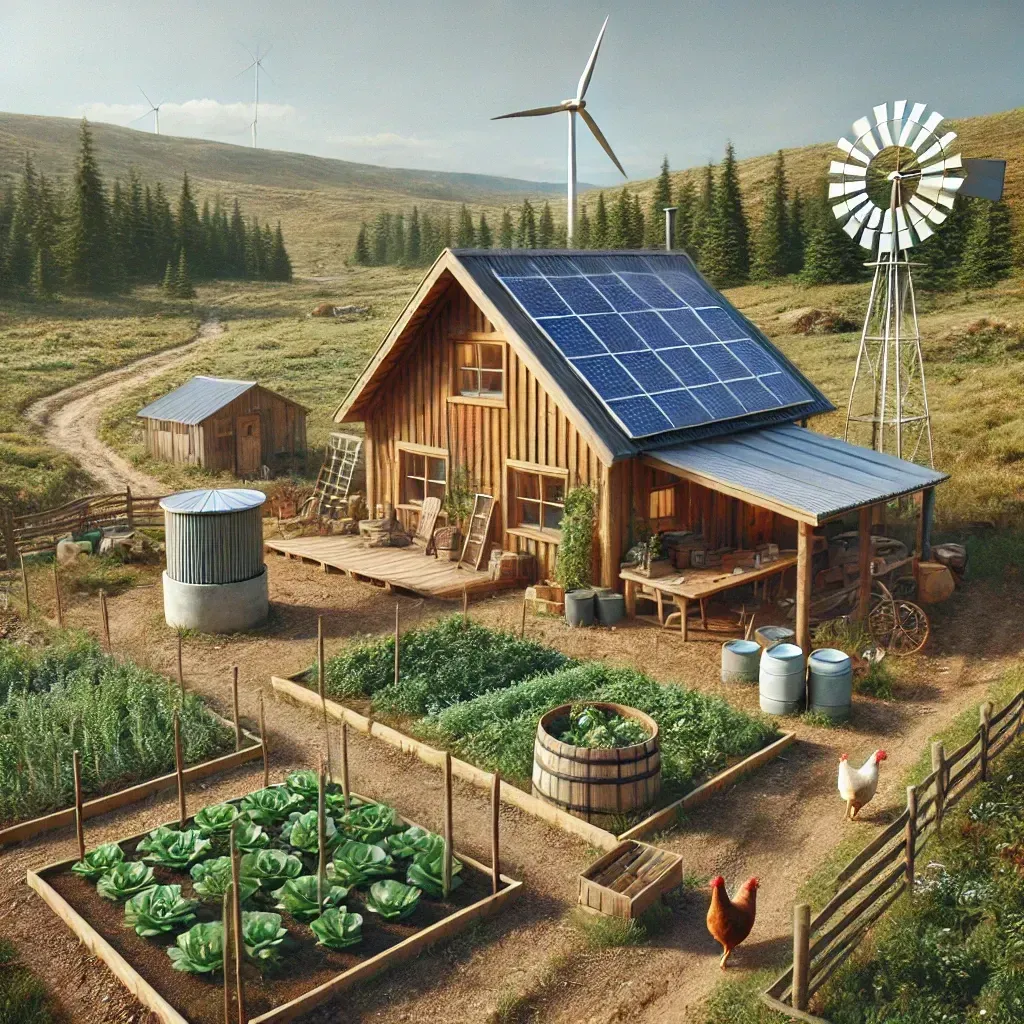
Small-scale homesteading blends food production, skill-building, and outdoor work. It ranks moderate in difficulty: the learning curve is real, but the upfront investment can be reasonable.
Startup costs depend on goals. A basic chicken coop and initial flock might be $500–$2,000. Fencing for goats or other small livestock ranges from $1,000–$3,000, and a serious garden setup can be $500–$1,500 for raised beds, irrigation, and tools.
Most agricultural activities fit within rural zoning, but local regulations can limit animal types, numbers, or setbacks. Check county codes and speak with local extension offices for guidance. The USDA and state extension services offer useful resources and sometimes grant programs for small farms.
Time commitment varies: chickens need daily care (15–30 minutes), gardens require seasonal intensity (a few hours per week), and larger livestock demand consistent attention. Many hobby farmers start small and expand as skills grow.
Homesteading rewards patience: fresh food, skill development, and a tangible sense of accomplishment. It also offers potential property tax benefits in some states if you qualify for agricultural classifications—check local rules carefully.
Rural Land Use Idea #5: Off-Grid Living with Full Infrastructure
Off-grid living replaces municipal utilities with private systems and ranks as high cost and high difficulty. You’re building the infrastructure that municipalities usually provide.
Solar power is commonly central. A residential off-grid system sized for moderate usage might provide roughly 8–12 kWh/day, with installed costs in the $15,000–$30,000 range (panels, inverters, batteries, installation). Larger or higher-usage systems increase costs substantially.
Water solutions depend on geology. Well drilling often runs $5,000–$15,000; springs or creeks require pumps and filtration systems ($2,000–$5,000) and may need permitted use depending on local water law. Water storage tanks ($500–$3,000) add resilience.
Septic systems typically cost $3,000–$10,000 and require soil percolation tests, engineered designs, and permits. Some counties allow composting toilets as an alternative—these reduce permit hurdles in some areas.
Permit needs vary: wells and septic usually require permitting and inspections. Solar for standalone systems sometimes has fewer permitting requirements, but many counties require electrical permits regardless. Check local codes and consider hiring licensed contractors for installations that require official approvals.
Off-grid systems require technical knowledge for maintenance: managing battery health, pump systems, and wastewater management. Many people hire professionals for install and handle routine maintenance themselves. Assess local climate and resource availability—solar works well in sunny regions but is less cost-effective in consistently cloudy areas; cold climates affect battery and water system performance.
Off-grid living works for those valuing independence and willing to invest in systems and skills. Reliable internet options (satellite services like Starlink) have made remote work more feasible for many off-gridders, but latency and cost remain considerations.
Rural Land Use Idea #6: Building Your Primary or Secondary Home
Building a custom home on your land is a common goal but requires significant planning, budget, and time. Costs, timelines, and permit requirements vary widely; prepare for a multi-step process.
Construction costs depend on size, finishes, and local labor rates. Basic shell construction in many rural areas can run $100–$150 per square foot; higher-end finishes push costs to $200–$300+ per square foot. A modest 1,500 sq ft home could therefore range widely, often between $150,000 and $300,000 in total build costs, not including land, site work, or utilities.
Permits and inspections typically include engineered plans, foundation, framing, electrical and plumbing inspections, and final occupancy approvals. Expect several months to prepare plans and secure permits, and another many months for construction. Weather, supply chains, and contractor scheduling can extend timelines.
Site work is an early cost: soil tests ($500–$1,500), grading, access road improvements, and possible driveway/bridge work ($2,000–$10,000+). Utility connections (or off-grid alternatives) must be coordinated before or during construction. Work with local builders who understand regional requirements—frost depths, wind loads, wildfire setbacks—and local permitting practices.
The National Association of Home Builders (NAHB) and local builder associations are useful resources for finding reputable contractors and understanding the process. Maintain financial flexibility and avoid terminating your current housing until the new home reaches late-stage completion.
Rural Land Use Idea #7: Land Development and Subdivision (Highest Complexity)

Subdivision and development convert land into multiple sellable lots and represent the most complex and capital-intensive option. This is a full business undertaking rather than a simple improvement project.
Costs include surveys, engineering, road construction, utility extensions, environmental studies, and legal fees. Small subdivision projects may start around $50,000, but many projects exceed $200,000–$500,000 once infrastructure is included.
Permit complexity is high: preliminary plats, public hearings, environmental assessments, road dedication, and infrastructure bonding are commonly required. Timelines typically run 12–36 months and can lengthen if opposition arises or environmental issues appear.
Counties often require infrastructure—engineered roads, drainage, water and sewer provisions—before final plat approval. This means substantial upfront spending long before lots are ready to sell.
Development can be profitable, but it also carries market risk. For example, buying 40 acres at $4,000/acre ($160,000) and investing $200,000 in infrastructure, then selling ten parcels could yield meaningful returns—but this scenario depends on realistic market demand, accurate cost estimates, and favorable timing. Many projects encounter delays or margins narrower than expected.
Development suits experienced investors or buyers partnering with established developers. It requires business planning, contingency reserves, and familiarity with local land-use policy.
Choosing Your Path: Match Rural Land Use Ideas to Your Goals
With seven ranked options, choose by honestly assessing four factors: available budget, time horizon, skill level, and primary motivation.
Budget constrains immediate choices. Under $2,000? Camping, holding, or initial homesteading steps are realistic. $5,000–$20,000 opens RV placement and more substantial hobby farming. $20,000+ enables significant off-grid setups and many tiny-home options. $50,000+ begins to make home construction and small subdivisions feasible.
Time horizon clarifies urgency. Need land usable within weeks? Camping or hosting an RV is sensible. Have multi-year patience? Building or holding for investment could be better.
Skill level matters. Beginners succeed with camping and holding. Moderate DIY skills enable RV living and small homesteads. Off-grid systems, home construction, and development usually require professional help or strong technical knowledge.
Motivation drives the right fit. Recreation calls for camping or RVs. Wealth-building aligns with holding or development. Lifestyle changes point toward homesteading or off-grid living. Be honest about your “why”—it will guide sustainable decisions.
Evolution is normal: many owners start small and scale up. Camp while planning an RV; live in an RV while saving for a home; homestead while installing off-grid systems. Flexibility and patience generally beat rigid plans.
For more guidance as your plans evolve, you can explore additional land buying guides. And always verify local rules and consult professionals for legal, tax, or technical matters.
Common Questions About Rural Land Use
Do I need to decide how I’ll use the land before I buy it?
No—many successful land owners purchase first and refine their plans over time. Start with a general idea of possibilities that interest you, but confirm that the property’s zoning can accommodate those intended uses. Buying without confirming zoning is possible, but it increases risk. When in doubt, contact the county planning office before purchase.
What’s the most affordable way to start using rural land immediately?
Camping and recreation usually cost the least—often under $500 for basic equipment. This approach lets you enjoy the property right away while learning its characteristics and saving for future improvements. It’s a low-risk way to test whether the land meets your expectations.
How do I find out what permits I’ll need for my rural property?
Start by contacting your county planning or building department and asking about specific uses (building, septic, well, agriculture, RVs, etc.). Requirements vary dramatically by jurisdiction, so local verification is essential. Many counties offer online zoning maps and permit guides; if not, an in-person visit or phone call is a good next step.
Can I combine multiple uses on the same piece of rural land?
Yes—most rural properties allow multiple simultaneous uses (camping, homesteading, holding, etc.), but confirm zoning to avoid surprises. Combining uses—like camping while building or farming on part of a parcel—can be an efficient, low-risk way to phase development.
Ready to Find Land That Fits Your Vision?
You now understand a spectrum of rural land use ideas—from simple camping to complex development. The right property depends on your goals, timeline, and budget.
LandFix offers owner financing options that can make ownership more accessible for many buyers, but terms vary by property and borrower. Learn about financing or see parcels available now. Use the payment calculator to estimate monthly costs, and consult a tax or legal professional for personalized advice.