

Why Most Families Struggle to Build Lasting Wealth
Most families want to leave something behind. The instinct is there. But the roadmap is often missing.
Generation after generation, family wealth gets parked in financial instruments — 401(k)s, brokerage accounts, savings vehicles — that are abstract, complex to transfer, and emotionally disconnected from the people who hold them. When the original builder of that wealth passes on, heirs often face a tangle of probate, tax implications, market timing, and paperwork that can quietly erode what took decades to accumulate.
Research by estate planning experts Williams and Preisser, documented in their book Preparing Heirs, suggests that many families struggle to maintain wealth across multiple generations. The pattern is well-documented and why most family fortunes don’t last beyond three generations has become an important conversation in financial planning circles.
The problem isn’t that families don’t care. It’s that they’re never handed a practical, tangible alternative.
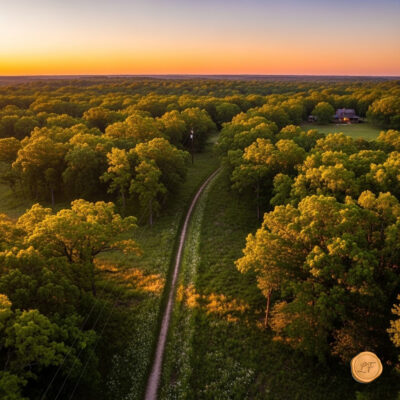
Why Vacant Land Is One of the Simplest Assets to Own and Pass Down
Here’s something that often surprises people: vacant land is one of the least complicated things you can own. And that simplicity is exactly what makes it so powerful as a legacy vehicle.
Unlike a rental home, there’s no roof to repair, no tenant to manage, no appliance that breaks at midnight. Unlike a stock portfolio, it cannot be wiped out by an algorithm or a bad earnings report.
You can’t hack a parcel of ground. You can’t accidentally delete 40 acres.
Three pillars make land uniquely suited for family legacy:
- Physical permanence. Land is immovable and indestructible in the most fundamental sense. It will exist for your children and your children’s children, exactly where you left it.
- Low carrying costs. In most rural counties, the annual property tax on a modest vacant parcel is genuinely modest — often less than a monthly streaming subscription. There’s no mortgage insurance, no HOA, no maintenance budget required.
- Legal simplicity. A deed transfer is one of the most straightforward legal instruments in real estate. When the land is paid off, passing it to the next generation doesn’t require a team of attorneys or months of probate court.
This is why affordable land for generational wealth building resonates with so many families who feel priced out of real estate but still want something real to show for their effort. You can also explore how owner financing makes land ownership accessible even without a bank in the picture.
The Grandfather Who Left Something Better Than Money
Earl never talked much about money. But one summer evening, decades ago, he signed a few papers and paid a modest sum for a quiet piece of rural ground nobody else seemed to want.
No house on it. No utilities. Just grass, a creek, and a tree line along the western edge.
He didn’t buy it as an investment strategy. He bought it because it felt right — because something in him understood that owning a piece of earth meant owning something real.
Now his grandchildren gather there every summer. They know where the creek runs shallow enough to wade. They know which tree has the best climbing branches. And the land — still in the family name, still quiet, still real — is worth considerably more than Earl ever paid for it.
That’s the quiet power of a vacant land generational wealth investment. It doesn’t make headlines. It doesn’t ping your phone. It just sits there, year after year, growing in value and in meaning.
If you’ve ever wondered whether land could be part of your family’s story, you’re already asking the right question. You can browse affordable vacant land listings and see what’s possible before we go any further.
 The Numbers Behind Land as a Long-Term Investment
The emotional case for land is strong. The financial case quietly backs it up.
According to USDA land value reports, rural and agricultural land has demonstrated a pattern of steady, long-term growth over many decades. Industry data and research from institutions like NCREIF suggest that rural land has historically delivered appreciation with lower volatility than equity markets — meaning fewer dramatic drops alongside the long upward trend.
That matters a great deal when you’re thinking in generational terms. A stock portfolio can lose a third of its value in a single quarter.
Land, particularly rural land purchased in emerging or growing regions, has generally held its value even through economic downturns — and then recovered and continued climbing.
“Land is the only thing in the world worth working for, worth fighting for, worth dying for, because it’s the only thing that lasts.”
This isn’t a promise of specific returns. Every parcel is different, and no investment is guaranteed. But data suggests that rural land investment for future generations offers a compelling combination of tangibility, stability, and long-term upside that few other asset classes can match at an accessible entry price.
How to Transfer Land to Family Members: A Simple Step-by-Step Guide
One of the biggest myths about land ownership is that passing it on is complicated. In reality, knowing how to transfer land to family members reveals just how straightforward the process genuinely is — especially compared to transferring a home, a business, or a retirement account.
Here’s a plain-language overview of the process:
✅ How to Transfer Your Land to the Next Generation
- Confirm the land is paid off or the balance is cleared. A free-and-clear deed gives you complete control over the transfer — no lender approval needed.
- Request a copy of your recorded deed. Your county recorder’s office should have this on file. It confirms you are the legal owner of record.
- Decide on your transfer method. You can transfer land as a direct gift during your lifetime, include it in your will, or place it in a family trust or LLC for broader protection across multiple generations.
- Prepare a new deed. A quitclaim deed or warranty deed naming your family member as the new owner is typically all that’s required. Many families work with a local real estate attorney for this step.
- Record the new deed with your county recorder’s office. This is the step that makes the transfer official and legally binding. The filing fee is usually nominal.
- Notify your county assessor to update tax records. This ensures future tax bills go to the right person and prevents confusion down the line.
Note: No mortgage lender approval is needed on paid-off land — you own it free and clear. For gift and estate tax considerations when transferring real property to family members, the IRS provides guidance on gift and estate tax basics that’s worth reviewing with a tax advisor.
That’s it. Compare that to the process of transferring a business, settling a brokerage account through probate, or navigating a home sale among multiple heirs — and you’ll immediately understand why vacant land is easy to inherit.
Ready to Start Your Family’s Land Legacy?
You don’t have to have everything figured out before you take a first step. Many families start simply by looking — at what’s available, what’s affordable, and what feels right.
LandFix offers owner-financed parcels with no credit check required and down payments that won’t derail your monthly budget. This is the kind of decision your kids will talk about around a campfire someday.
Land vs. Other Generational Assets: An Honest Comparison
There’s no shortage of options when it comes to building wealth for the next generation. Stocks, savings accounts, crypto, rental properties — all have their advocates.
But when you measure each one against the specific demands of a legacy asset, land earns a quiet, consistent advantage. Take a look at how these asset classes compare across the dimensions that matter most for generational transfer.
For further reading, Investopedia’s analysis of agricultural land as a long-term investment offers additional context worth exploring.
| Asset Type | Transfer Simplicity | Ongoing Maintenance | Market Volatility | Physical & Tangible | Legacy Value |
|---|---|---|---|---|---|
| Vacant Land | Easy | Very Low | Low | Yes | High |
| Stocks / ETFs | Moderate | Low | High | No | Low |
| Cryptocurrency | Complex | Low | Very High | No | Low |
| Rental Property | Complex | High | Medium | Yes | Medium |
| Savings Account | Moderate | None | Low | No | Low |
The Hidden Lessons Land Teaches the Next Generation
Not everything that passes down through a family has a dollar amount attached to it.
When parents walk their children along a property boundary and say, “This is ours,” something happens that no brokerage account statement can replicate. A child learns what ownership feels like.
They learn patience — that some things grow slowly and that’s okay. They learn stewardship: that land asks something of you in return for what it gives.
Imagine a family planting a grove of trees on their parcel — not for themselves, but for their grandchildren’s shade. That’s a different relationship with time than most of us are taught to have. Or consider parents explaining survey stakes to a curious eight-year-old, pointing to corners and saying, “All of this, from here to there — we own it, and someday, it’ll be yours.”
These moments are the non-financial inheritance. They shape how the next generation thinks about ownership, responsibility, and commitment to something beyond themselves.
A vacant land generational wealth investment isn’t just about what the land is worth on paper. It’s about what it’s worth in memory, in identity, and in the kind of family you’re actively choosing to become.
That kind of legacy can’t be transferred through a wire. It has to be walked.
Why Owner Financing Makes This Dream Accessible Right Now
The single biggest reason families don’t pursue land ownership isn’t interest — it’s access. Traditional banks make rural land financing complicated, slow, and credit-dependent.
Many families who would be excellent long-term stewards of a piece of ground get turned away before they ever start. Owner financing removes that barrier entirely.
With owner financing land for family legacy, you work directly with the seller — in LandFix’s case, with a team that understands exactly what you’re trying to build. No credit check. No bank approval. No waiting months to find out if you qualify.
You make a manageable down payment, agree to straightforward monthly terms, and start building equity from day one. Every payment is a step toward a free-and-clear deed.
And a free-and-clear deed, as we’ve covered, is one of the simplest assets in the world to pass on to the people you love. That’s the whole arc — from first payment to family heirloom — and it’s more achievable than most people realize.
Learn more about LandFix owner financing terms and options and see how the process works from start to finish.
Frequently Asked Questions About Land and Generational Wealth
Why is vacant land considered a good generational wealth investment?
Vacant land requires no structural maintenance, carries low annual costs, and is one of the simplest assets to transfer legally from one generation to the next. It appreciates steadily over time, cannot be erased by a market algorithm, and gives families a tangible, inheritable asset that holds real meaning beyond its dollar value. For many families, it’s the most straightforward real asset they’ll ever own.
How do I transfer land to family members after it is paid off?
Once your land is paid off, you prepare a new deed — typically a quitclaim or warranty deed — naming your family member as the new owner, then record it with your county recorder’s office. No lender approval is needed because there’s no lender involved. For broader multigenerational protection, many families choose to place the land in a family trust or LLC before or during the transfer process.
Is rural land a good investment for future generations even if we don’t build on it?
Absolutely. Rural land investment for future generations doesn’t require any development to hold or grow in value. Raw land appreciates over time, can often be leased for agricultural or recreational use, and represents a low-maintenance asset that gives your heirs real options — not obligations. They can build, sell, lease, or simply hold it, depending on what life looks like when it passes to them.
Can I buy land with owner financing and still leave it to my children?
Yes. Owner financing land for family legacy is a very practical path. You make payments directly to the seller, build equity with every installment, and once the balance is fully paid, you receive a clear deed in your name. That deed can then be transferred to your children through a straightforward legal process — no bank, no lender, no third-party approval required. See available parcels to start exploring your options today.
Your Family’s Legacy Starts With One Piece of Ground
Earl started exactly where you are right now — with a quiet feeling that owning something real was worth it. He didn’t have a financial plan. He had a decision.
You can make that same decision today. LandFix offers owner-financed land with no credit check, low down payments, and a process designed to be as simple as the asset itself.
Browse what’s available, ask a question, or simply let yourself imagine what your family’s piece of ground might look like. Find your family’s first piece of land today — and start a story worth telling.